Here are some best practices for organizing business documents:
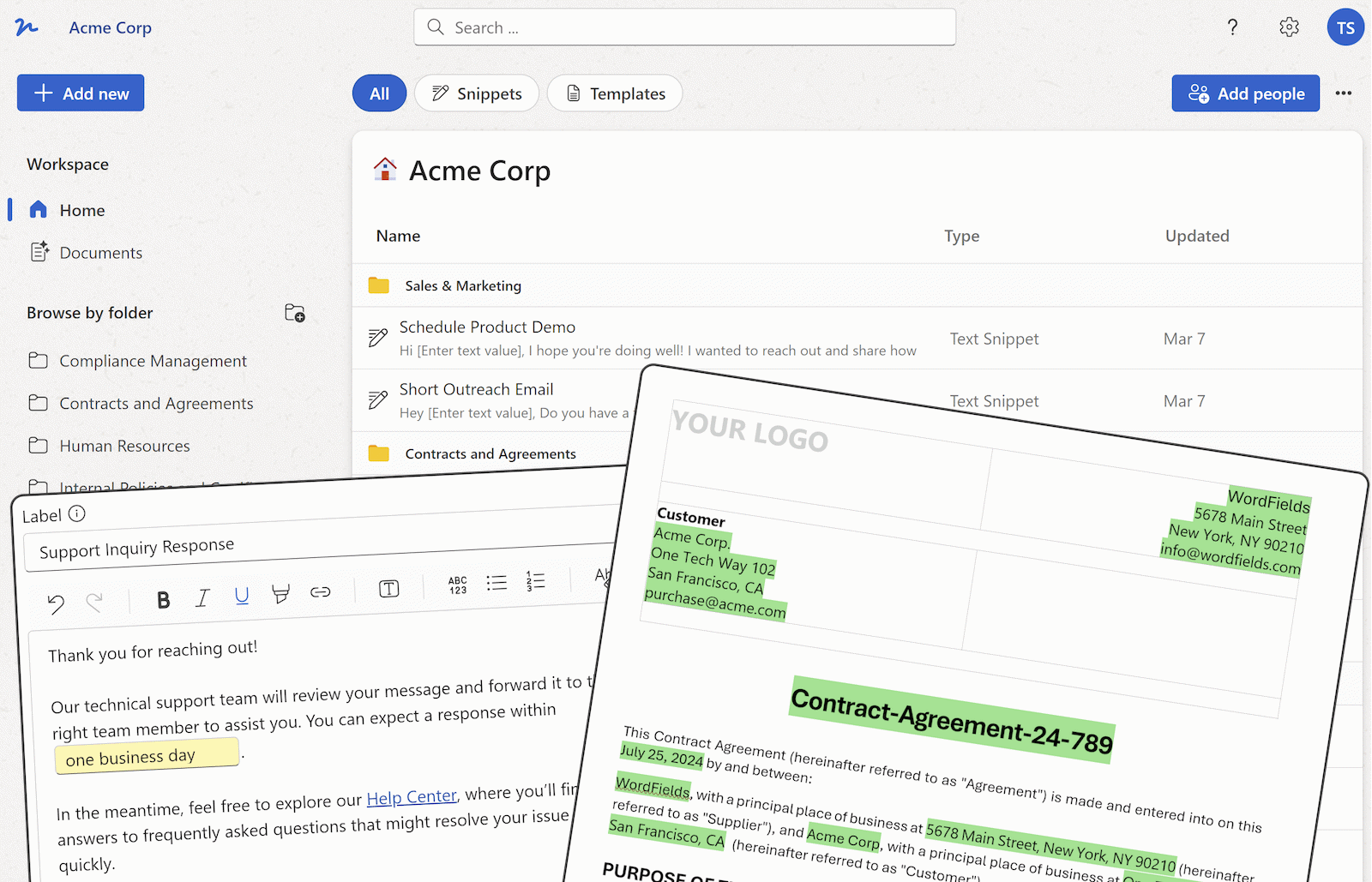
Create a clear file structure: Organize documents into folders and subfolders based on their type and purpose. For example, you can have a folder for financial documents, another for marketing materials, and so on.
Use descriptive and consistent naming conventions: Use a consistent format for naming files and folders, such as "YYYY-MM-DD_DocumentName.pdf". This will make it easier to find and sort documents.
Use tagging or metadata: Tagging or adding metadata to documents can help you find them more easily. For example, you can tag a document with keywords that describe its contents, or add information such as the author's name or the date it was created.
Back up important documents: Regularly back up important documents to an external hard drive or cloud storage service to protect against data loss.
Keep old documents for a certain period of time: Keep old documents for a certain period of time as per legal requirement or company policy.
Use a document management system: Document management systems can help you organize, store, and share documents more efficiently.
Train employees: Train employees on the organization and labeling of documents, so they understand the importance of keeping things in order.