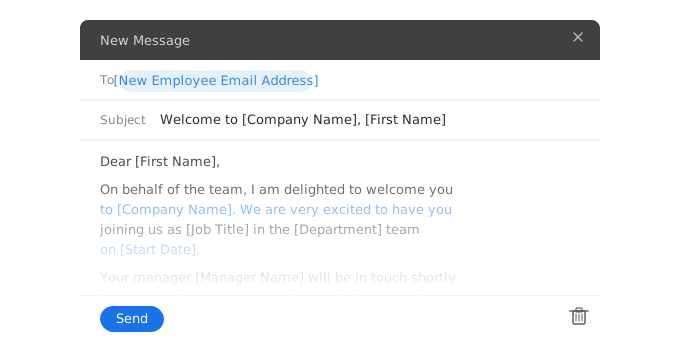
A ready-to-use welcome letter template for new hires. Covers start date, first-day logistics, and key contacts — personalise it in WordFields and send in under a minute.
Welcome Letter
[VALUE("Organization")]
[Document date]
Dear [Employee first name],
Welcome to [VALUE("Organization")]. We are delighted to have you joining us as [Job title] in the [Department] team, and I want to make sure your first day gets off to a great start.
Your Start Details
Your first day is [Start date]. Please arrive at [Office address] by [Start time] and ask for [Contact name] at reception. They will meet you, get you set up, and walk you through the day.
What to Expect on Your First Day
[e.g. office tour, team introductions, IT setup, initial briefing with your manager]
Before You Arrive
Please bring [e.g. proof of right to work]. If you have any questions before your start date, please do not hesitate to reach out to [HR contact name] at [HR contact email].
We are looking forward to working with you.
Warm regards,
| [VALUE("Organization")] | |
| Name: [VALUE("Author.FullName")] | |
| Title: [Author job title] | |
| Date: ________________________________ |
=VALUE("Organization")
Document date
Dear Employee first name,
Welcome to =VALUE("Organization"). We are delighted to have you joining us as Job title in the Department team, and I want to make sure your first day gets off to a great start.
Your first day is Start date. Please arrive at Office address by Start time and ask for Contact name at reception. They will meet you, get you set up, and walk you through the day.
e.g. office tour, team introductions, IT setup, initial briefing with your manager
Please bring e.g. proof of right to work. If you have any questions before your start date, please do not hesitate to reach out to HR contact name at HR contact email.
We are looking forward to working with you.
Warm regards,
| =VALUE("Organization") | |
| Name: =VALUE("Author.FullName") | |
| Title: Author job title | |
| Date: ________________________________ |
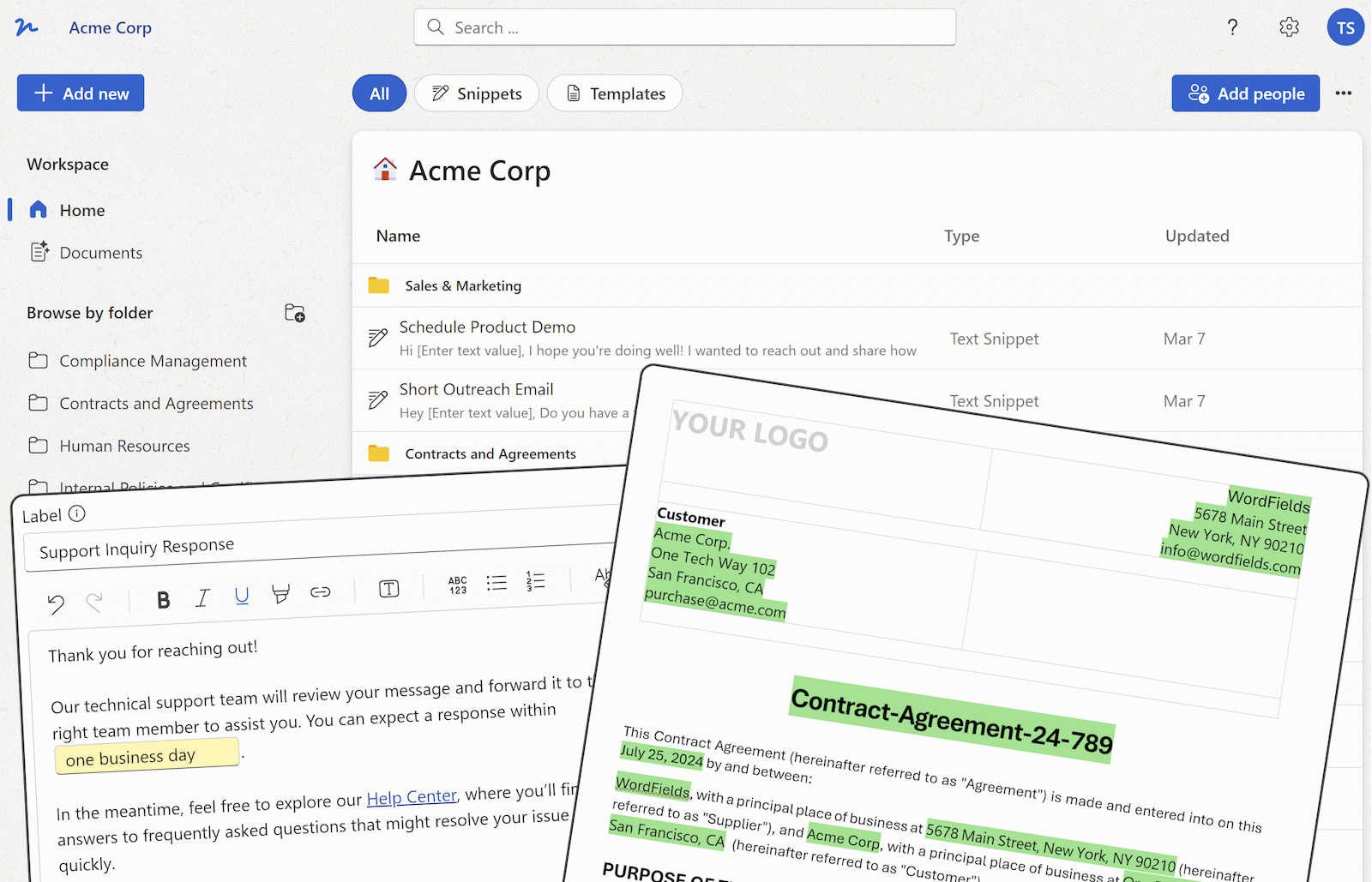
Use WordFields to fill this in automatically, share it with your HR team, and generate a personalised letter for every new hire — without editing the file each time.
What's included
This template auto-populates the following fields when used in WordFields:
- Employee name, job title, and department
- Start date, start time, and office location
- Hiring manager name and contact details
- First-day schedule summary
- Company name and organisation details (pulled from your workspace automatically)
- Optional probation period clause (shown or hidden based on your input)
When to send a new employee welcome letter
A welcome letter goes out after the offer letter is signed and before the employee's first day — typically within 24–48 hours of the contract being returned. Its job is to bridge the gap between acceptance and arrival: confirming practical details, reducing first-day anxiety, and setting the tone for how your organisation communicates.
Most HR teams send it from the hiring manager rather than HR directly, as it feels more personal. For senior hires, some companies send a second letter from the CEO or department head. Either way, the content stays the same — what changes is the signature and the tone.
If your team hires regularly, a welcome letter template in WordFields means any manager can generate a correctly formatted, personalised letter in under a minute — without digging up the last version or asking HR to do it for them.
Frequently asked questions
What should a new employee welcome letter include?
At minimum: a warm opening, the employee's start date and time, where to go and who to ask for on arrival, what documents to bring, and a named contact for pre-start questions. Optional additions include a first-day schedule overview, dress code guidance, and links to the employee handbook or onboarding forms. The more practical detail you include, the less anxious your new hire will be before they arrive.
Who should a new employee welcome letter come from?
Typically the hiring manager, since it feels more personal than a generic HR letter. For senior hires, some organisations send two letters — one from HR covering logistics, and one from the CEO or department head covering culture and expectations. What matters most is that it comes from a named individual, not a generic company address.
When should you send a welcome letter to a new employee?
Send it within 24–48 hours of the signed contract being returned — not the night before the start date. The gap between signing and starting is often several weeks, and a prompt welcome letter keeps the new hire engaged and informed during that period. Leaving it too late risks the employee feeling forgotten or uncertain about their decision.
Is a welcome letter the same as an offer letter?
No. An offer letter is a formal document outlining employment terms — salary, role, start date — and is typically a legally binding agreement. A welcome letter comes after the offer is accepted and focuses on logistics and tone: making the new hire feel prepared and welcomed before day one. Both should be sent, but they serve entirely different purposes.
Can I use the same welcome letter template for every new hire?
Yes — that's exactly what a template is for. The structure, tone, and standard content stay fixed; only the personal details change each time. In WordFields, the variable fields are built into the template, so any manager can generate a correctly formatted, personalised letter in under a minute without touching the source document.
Does a new employee welcome letter have any legal standing?
Generally no — a welcome letter is not a contract and does not create legal obligations in the way an offer letter or employment contract does. It should not contradict or attempt to modify the terms already agreed in the signed contract. If you are unsure whether any content in your welcome letter could be interpreted as a contractual commitment, have it reviewed by an employment lawyer.
Related human resources templates
Explore more professional document and email templates you can copy, customize, and use immediately